
When My Invention Was Placed Under Secrecy
The Final Step Before Approval
When France's Ministry of the Armed Forces Told Me I Could No Longer Talk About My Invention
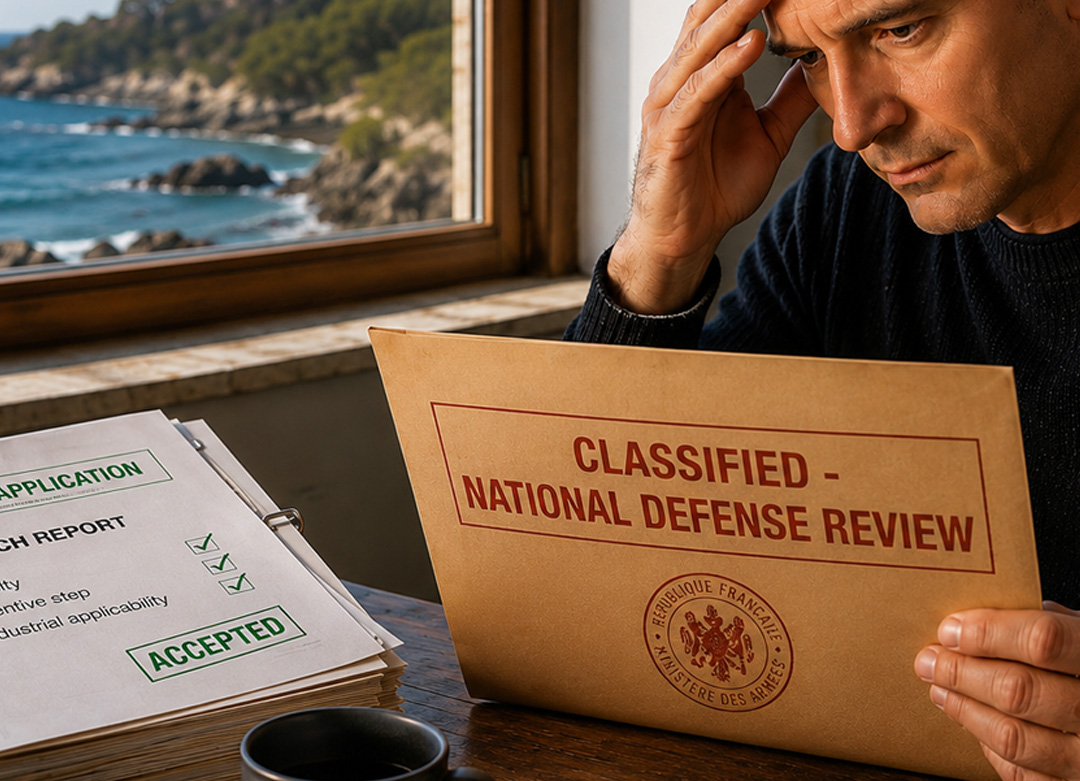
My boxer briefs and briefs were now, officially, subject to secrecy restrictions.
All I could do was wait.
The weeks went by. A decision was expected in August.
I found myself imagining every possible scenario. It was the middle of summer. Government offices were running at a slower pace, the hallways were quieter, and many desks were empty.
I pictured the examiner at the French Ministry of the Armed Forces opening my patent file for the very first time. In front of them lay dozens of technical drawings. Covered with reference numbers, cross-sections, and construction lines, they looked far more like aircraft blueprints than drawings for a piece of underwear.
What could they possibly be thinking as they studied such an unusual application?
Patent Review by the French Ministry of the Armed Forces
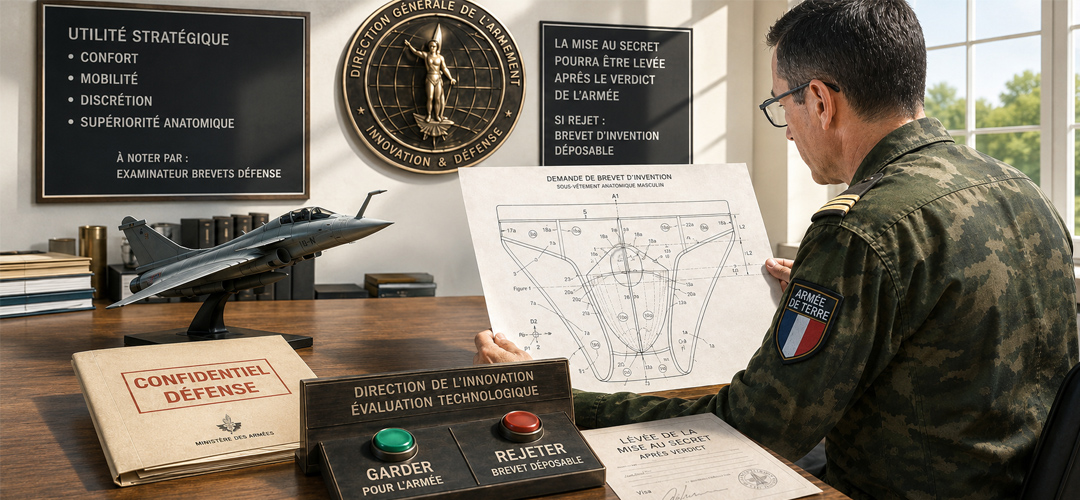
Waiting gave me plenty of time to think about how the military or the navy might use this underwear. Little by little, the reasons why my invention had attracted the attention of France's national defense authorities began to make more sense.
With the SABORDS system, it becomes possible to urinate while keeping one hand completely free to hold onto something, operate equipment, or maintain control of a weapon.
In war movies—and in countless accounts from military personnel—the moment a soldier has to urinate is often a moment of vulnerability. Both hands are frequently needed, a weapon may have to be set aside, and the ability to react instantly can be reduced.
That was one of the first practical applications that came to mind as I tried to understand why my invention had been reviewed by the Ministry of the Armed Forces.
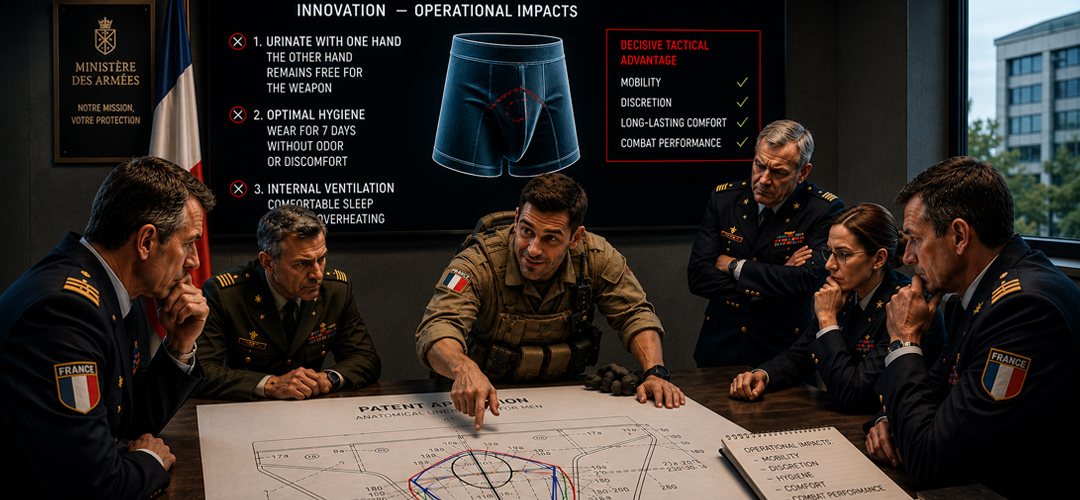
The more I thought about it, the more potential applications I imagined.
Hygiene seemed like another possible advantage. Being able to wear the same underwear for several days while maintaining a high level of comfort could be valuable in certain operational environments. Fewer clothing changes, less washing, and potentially simpler logistics.
I also thought about comfort during rest periods. Sleeping in underwear that doesn't create pressure or discomfort was something I had personally experienced throughout the years of prototype testing.
My imagination went even further. I pictured armored vehicle crews, submarine personnel, and, more broadly, anyone working in environments where movement is restricted or living conditions are especially demanding.
I wondered whether the examiners at the Ministry of the Armed Forces saw those same possibilities.
Then, on August 17, the answer finally arrived.
The secrecy order would be lifted.
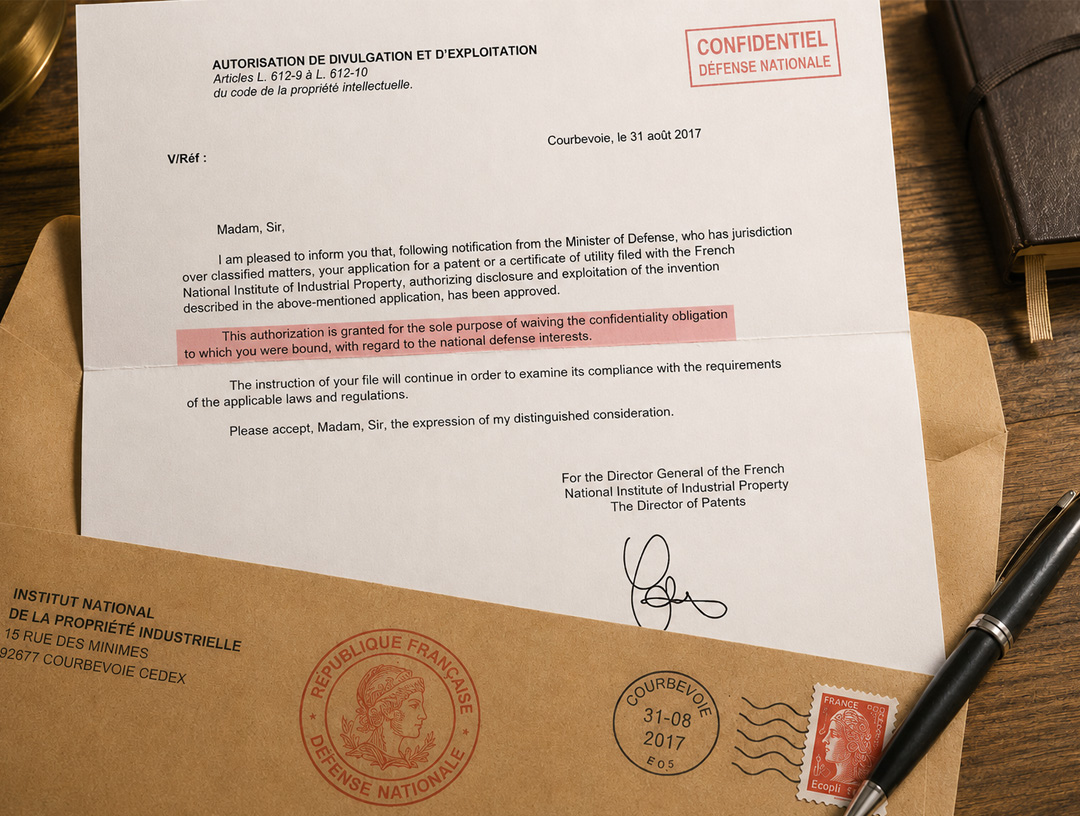
The French Ministry of the Armed Forces officially released me from the secrecy obligation imposed under the requirements of national defense.
Even then, I kept thinking about the advantages of the invention—especially the ability to keep one hand completely free. In many situations, that free hand can be used to maintain a secure grip, stabilize yourself, or react immediately.
That benefit became especially meaningful to me because I had experienced exactly that need while sailing through some of the most extreme ocean conditions I have ever encountered.
But that is another story... It is told in the chapter: Atlantic Crossing – The Bay of Biscay
I was finally free to commercialize my patented invention. My prototypes were fully developed and ready to be presented. All that remained was to convince the leading brands in the men's underwear industry.
→ Read the article: Why I Created SABORDS