
Because while our sailboat was battling this succession of storms, elsewhere in the same Atlantic
The Sinking of the Sonia Nancy: Ten Fishermen Rescued in a Force 11 Storm
January 4, 1998 — North Atlantic
That day, off the coast of Ireland and southwest of the Isles of Scilly, ten men were about to spend nearly ten hours in a situation that seemed to offer no way out.
Nine were Spanish. The tenth, David Fox, was Irish.
They were aboard the Sonia Nancy, a fishing vessel caught in one of the violent storms then sweeping across the Atlantic.
The wind reached Force 11. Contemporary press reports described waves around 50 feet high, while the rescue helicopter pilot later estimated that some were between 40 and 70 feet — approximately 12 to 21 meters (40 to 70 feet).
Engine Failure in the Middle of the Storm
The Sonia Nancy suffered engine failure and had to be taken under tow by another fishing vessel, the Mapescal.
But at around 7:00 a.m., an enormous wave struck the vessels.
The towline snapped.
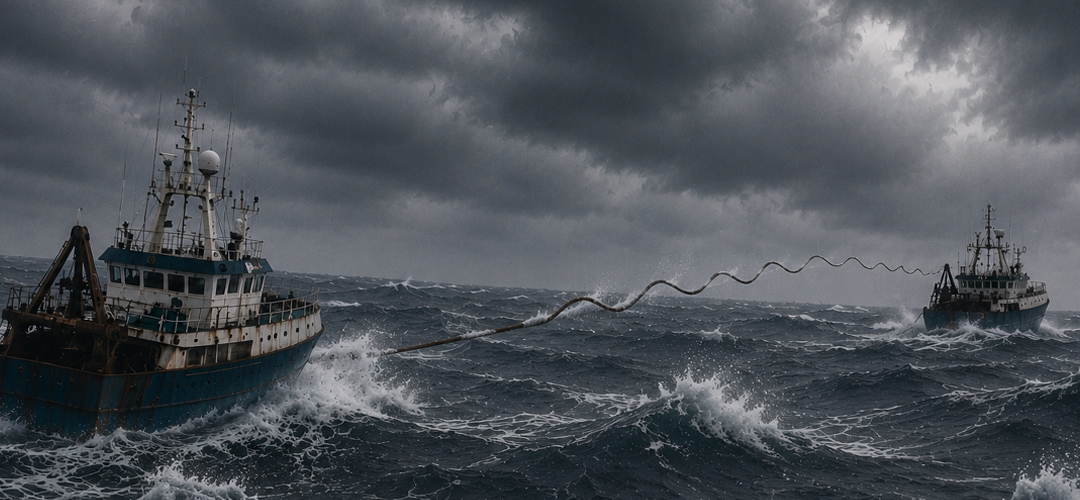
Attempts to reconnect it failed. Without propulsion, the Sonia Nancy was left at the mercy of the storm. Water began entering the vessel and the situation rapidly deteriorated.
At 7:25 a.m., a distress call was sent.
The fishing vessel began a long, uncontrolled drift.
Liferafts Swept Away by the Sea
British authorities launched a major rescue operation.
An RAF Nimrod aircraft reached the area and dropped liferafts near the vessel.
But even this attempt failed. The sea was so violent that recovering the rafts proved extremely difficult, and they were swept away. A later account presented to the British Parliament confirmed that the seas were so ferocious that liferafts reaching the vessel were simply torn away again.
Another solution had to be found.
The Fort Descaix Attempts to Approach
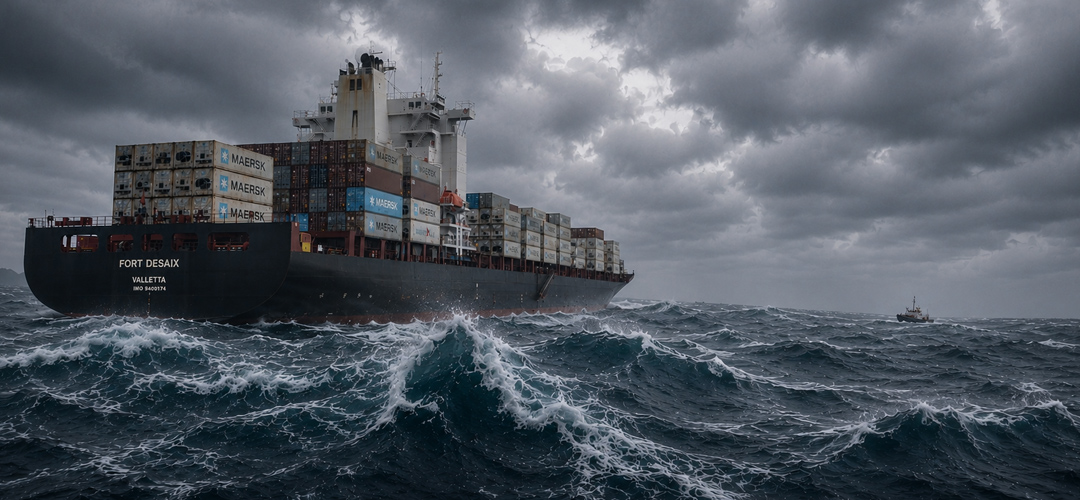
A huge French container ship, the Fort Descaix, weighing approximately 30,000 tons, diverted from its course to assist the ten men.
A Ship-to-Ship Transfer Becomes Impossible
The French cargo ship Fort Descaix attempted to assist the ten men aboard the Sonia Nancy. But the seas were simply too violent for the two vessels to get close enough to one another.
A ship-to-ship transfer could have required the use of a rope rescue ladder or scrambling net deployed down the enormous side of the cargo ship. Even in calm conditions, such a maneuver requires great care.
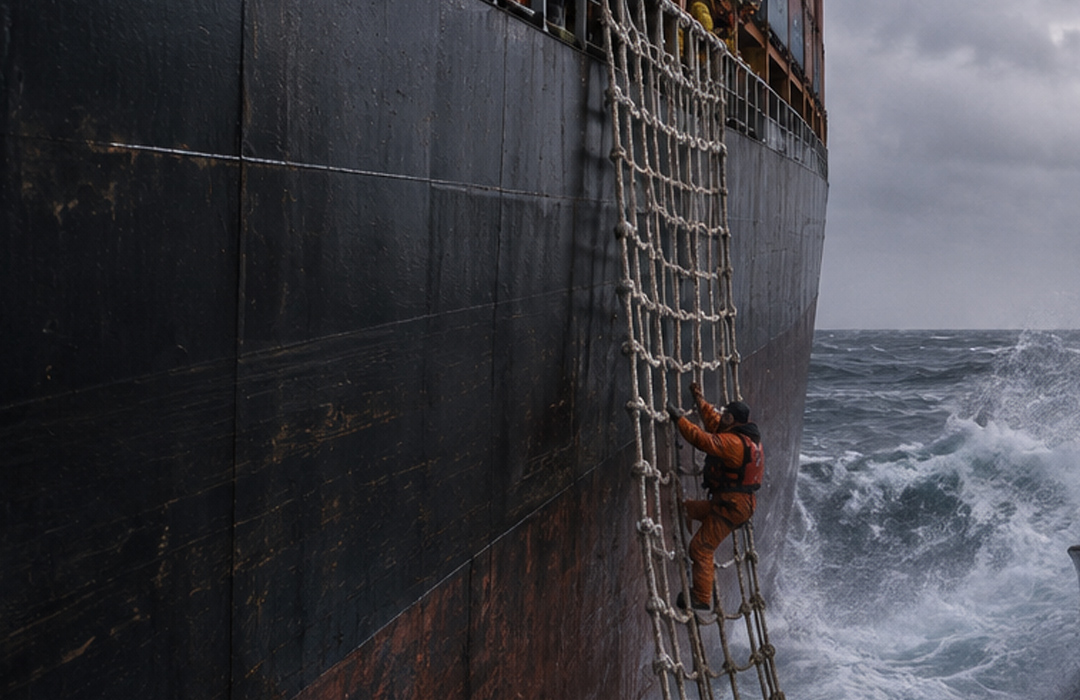
In a Force 11 storm, it becomes almost unimaginable.
The fishing vessel and the cargo ship were dramatically different in size and displacement. Huge waves lifted and dropped each vessel independently. A fisherman attempting to reach the rescue ladder could have been thrown against the hull, swept into the sea, or crushed between the two ships.
For the men aboard the Sonia Nancy, attempting a ship-to-ship transfer in such conditions could have amounted to Russian roulette.
Men Unwilling to Leave Their Vessel by Sea
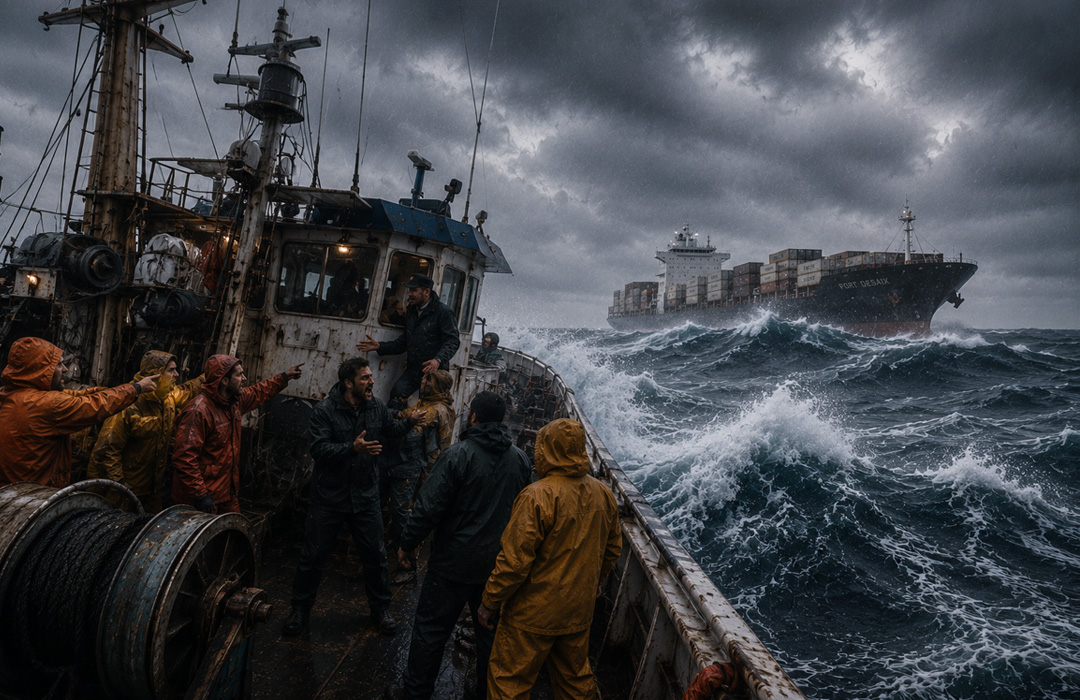
It is in this context that we can understand why some accounts describe the situation aboard the fishing vessel as bordering on open revolt.
To the fishermen, attempting a ship-to-ship transfer appeared extraordinarily dangerous.
The transfer never took place. The sea was simply too violent.
The Irish Times reported that the cargo ship was unable to come alongside the Sonia Nancy because of the sea conditions.
Rescue by ship had become impossible.
The ten men therefore remained aboard.
Only the Helicopter Remained
British authorities then dispatched a Royal Air Force Sea King.
The mission was already exceptional because of the distance involved.
Strong headwinds slowed the helicopter so dramatically that it required two refueling stops during the flight. By the time it finally reached the fishing vessel, it was operating close to the limits of its range.
A report to the British Parliament several months later noted that the Sea King had only a small, cluttered area near the bow from which to attempt the winching operation.
The first Sea King arrived shortly after 4:00 p.m.
Its pilot, Flight Lieutenant Al Potter, encountered seas unlike anything he said he had ever seen before.
The wind was ripping so much water from the tops of the waves that a layer of airborne spray hung above the ocean.
And time was running out.
The helicopter had only about 50 minutes of fuel available to complete the rescue.
The Winchman Is Thrown Violently Against the Fishing Vessel
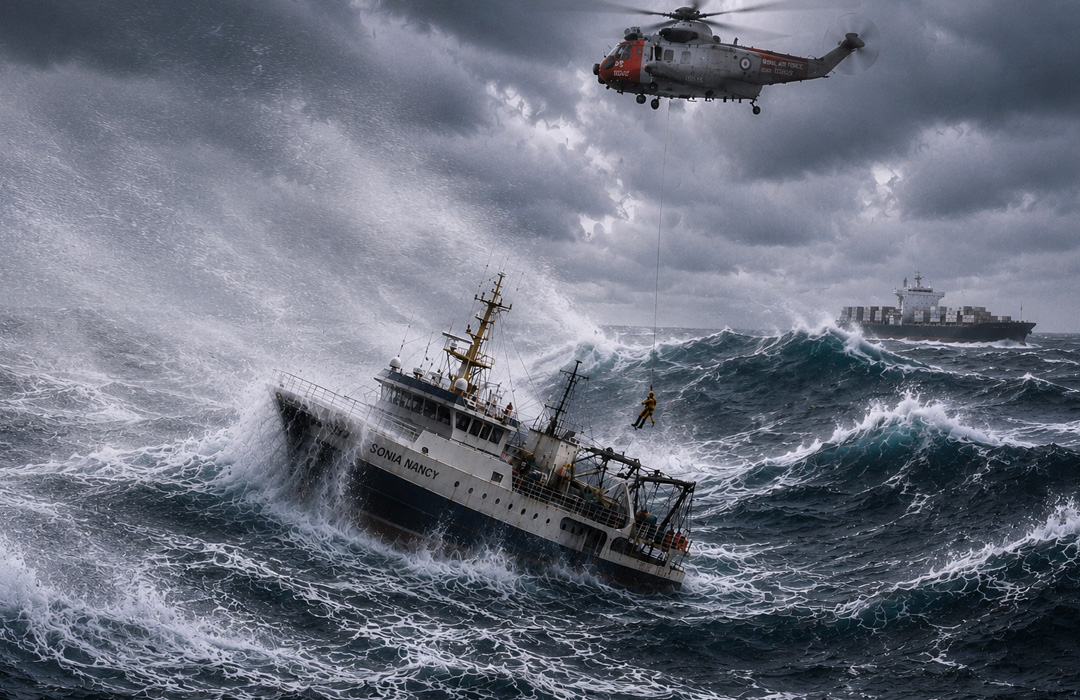
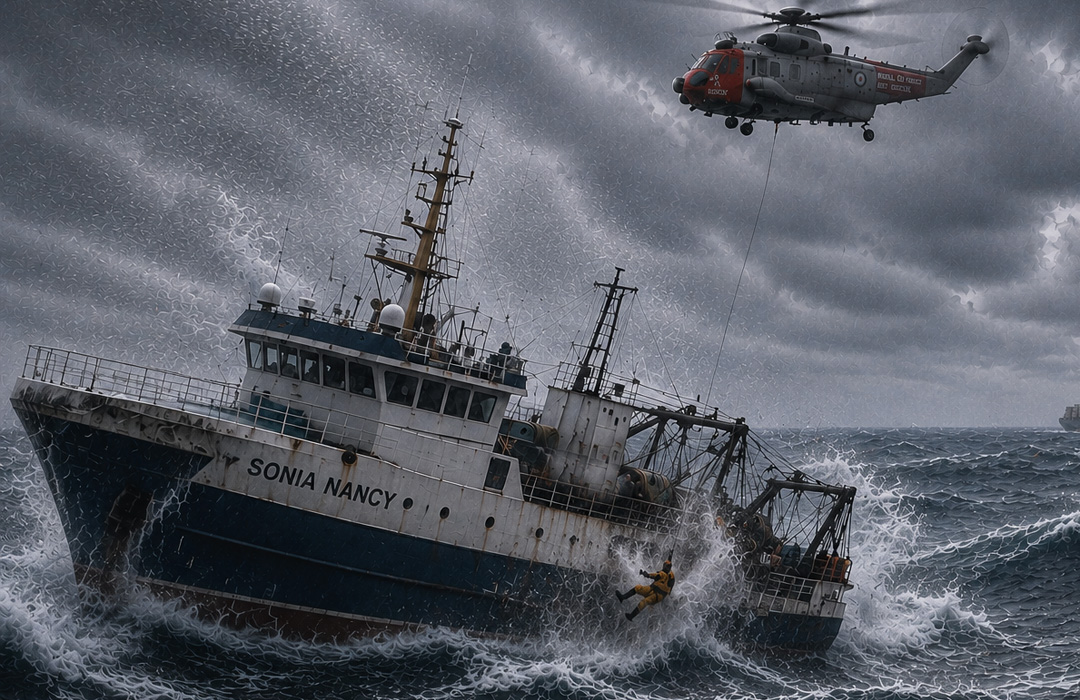
Flight Sergeant Pete Joyce was lowered from the helicopter on the winch cable.
His original task was to reach the Sonia Nancy and coordinate the evacuation of the fishermen from the deck.
But beneath him, the vessel was rising, falling, rolling and pitching unpredictably.
An enormous wave struck the ship.
Suspended from the cable, Pete Joyce had little control over his movement.
He was thrown violently against the fishing vessel.
The impact was serious enough for the maneuver to be stopped. Hurt and dazed, the winchman was pulled back into the Sea King. An account presented to the British Parliament several months later also confirmed the incident.
This is the moment depicted in our illustration.
The Rescuers Have to Improvise
It was now impossible to place the winchman aboard the Sonia Nancy.
The Sea King crew changed their approach.
The winch cable would instead be lowered directly to the fishermen.
There was another complication: nine of the ten men were Spanish, while the instructions from the helicopter were being given in English.
This was when David Fox,, the Irish radio operator aboard the Sonia Nancy, played a crucial role.
Co-pilot Ian Saunders transmitted the instructions by radio. David Fox received them and translated them into Spanish for the other crew members.
All ten men were eventually winched to safety, two at a time.
The operation succeeded.
All ten men were alive.
A Coast Guard spokesman later provided a striking description of those final moments: the Sea King was lifting the men from the deck while the fishing vessel was literally sinking beneath their feet.
The Sonia Nancy Disappears
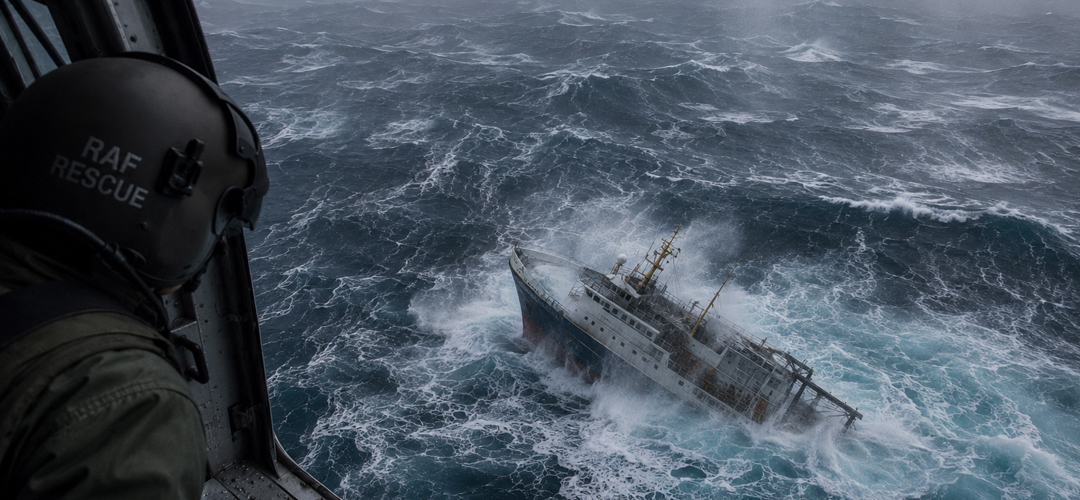
The rescued crew were taken to the Isles of Scilly, where the helicopter refueled before continuing to Culdrose in Cornwall.
Despite the ordeal and the hours spent in the storm, none of the ten men ultimately required significant hospital treatment.
Once safely ashore, the survivors were finally able to have coffee and soup.
The Sonia Nancy, meanwhile, was abandoned to the Atlantic.
It would eventually sink.
Meanwhile, We Were Also at Sea
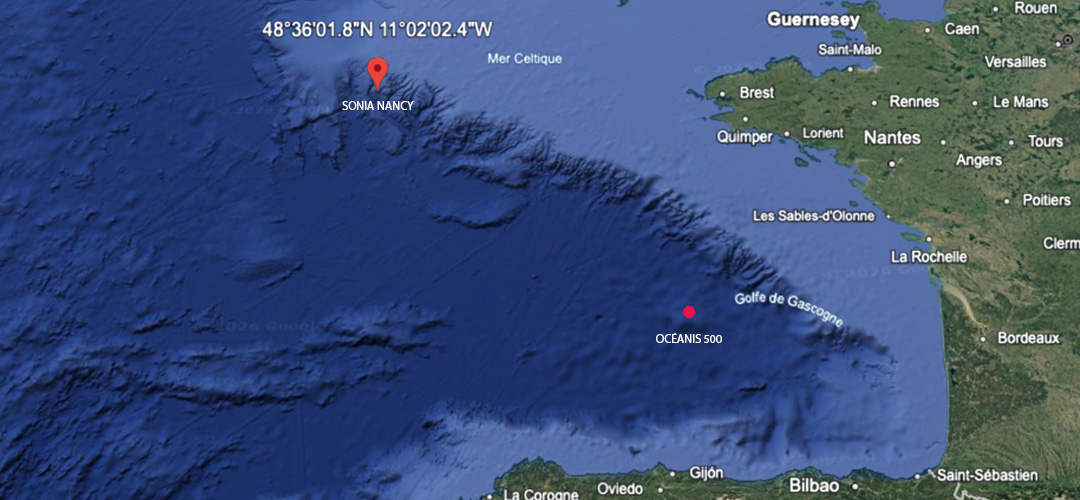
At the same time, a few hundred miles farther south: Atlantic Crossing Logbook – My Atlantic Crossing by Sailboat