
Every invention has a story. Behind this innovative men's underwear are years of research, trial and error, and countless prototypes.
Explore the SABORDS Journal and discover how the world's first patented anatomical boxer briefs came to life—designed to offer a completely new approach to men's comfort.
The Patent Journey: Turning an Idea Into a Protected Invention
Creating an invention is one thing.
Getting it officially recognized is another challenge entirely.
Behind this innovative men's underwear lies years of research, countless prototypes, and continuous refinement. Welcome to the SABORDS Journal, where I share the story behind the world's first patented anatomical men's underwear.
When I first considered applying for a patent, one question immediately came to mind. Before filing a single document, everything depended on the answer.
Had someone already thought of the same idea?
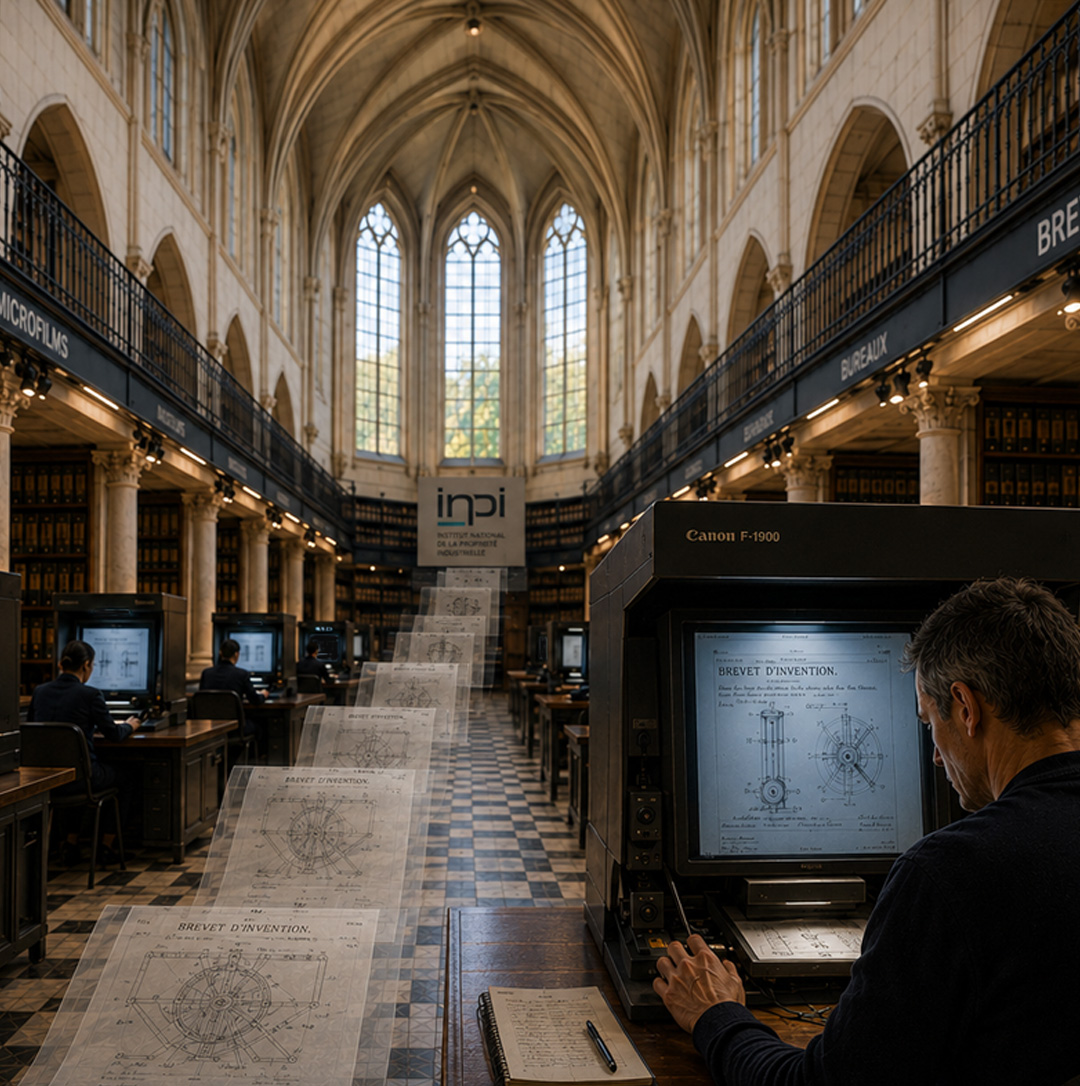
At that time, patent searches took place in one of the most unexpected locations imaginable: Notre-Dame de l'Immaculée-Conception Chapel,
next to the French Patent Office French National Institute of Industrial Property (INPI).
The Fear of Finding the Same Invention
The large reading room had an almost monastic atmosphere. Researchers whispered with archivists while millions of patents from around the world were stored on microfilm.
Long before patent databases became available online, every search meant sitting in silence, interrupted only by the steady clicking of microfilm readers.
To receive a patent, an invention must be genuinely new.
If someone has already disclosed the same idea—or something too similar—it can no longer be patented.
Every document I opened carried the same question:
"Is this the end of my project?"
Each search became a cycle of suspense, adrenaline, and relief.
Looking back, it reminds me of climbing.
Looking back, I find the comparison remarkably fitting. Inventing is like climbing. You search for the next hold, cling on with your fingertips, sometimes find yourself stuck, shift your position to discover a new route, sometimes fall... and then start again. Every hold simply allows you to keep moving upward.
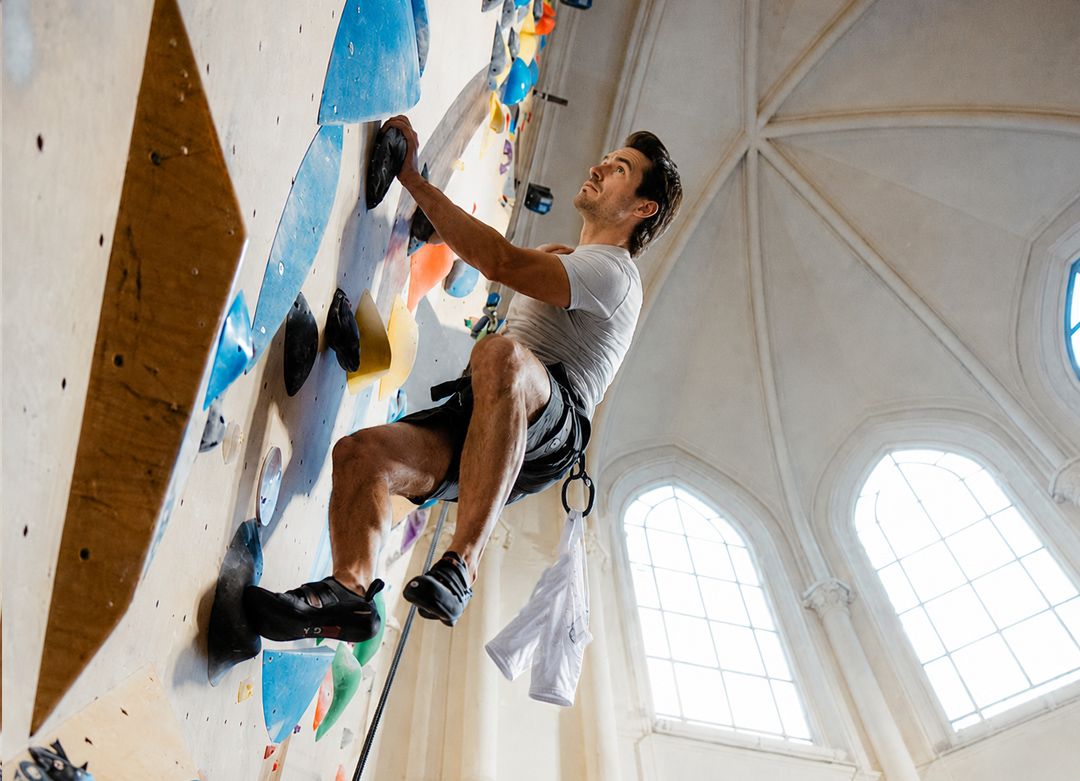
Today, the former Chapel of the Immaculate Conception has been transformed into an indoor climbing gym, offering more than a hundred climbing routes.
Why So Many Patents Never Become Products
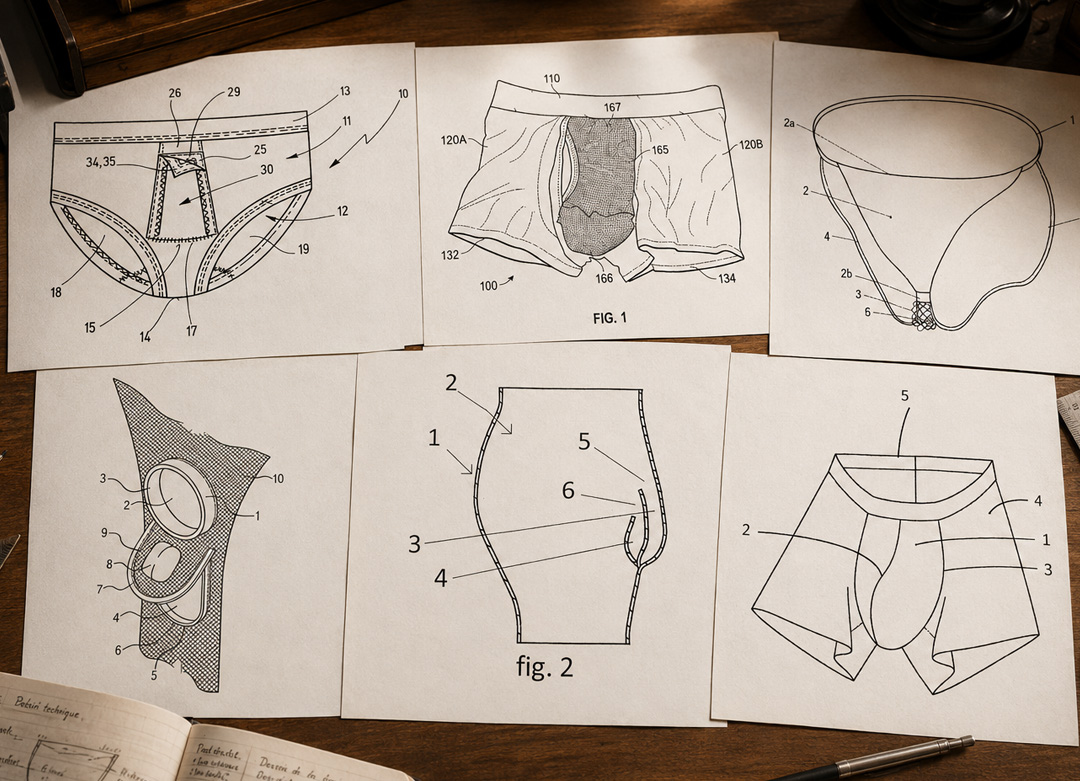
During my research, I discovered dozens of patents for men's underwear.
Some were fascinating. Some were incredibly complex. Some looked like ideas that had never gone beyond a drawing.
Filing a patent doesn't mean a product will ever exist.
In fact, very few privately filed patents ever become commercially manufactured products.
Many underwear patents describe concepts that would be extremely difficult—or impossible—to manufacture at scale.
My approach was the exact opposite.
I built working prototypes first. I cut fabric. I sewed. I unstitched. I modified patterns.
I tested them every day.
Only after creating a product that truly worked did I realize that part of its architecture might actually be patentable.
That's when I asked myself:
"Could this really become a patent?"
Writing a Patent Is an Art
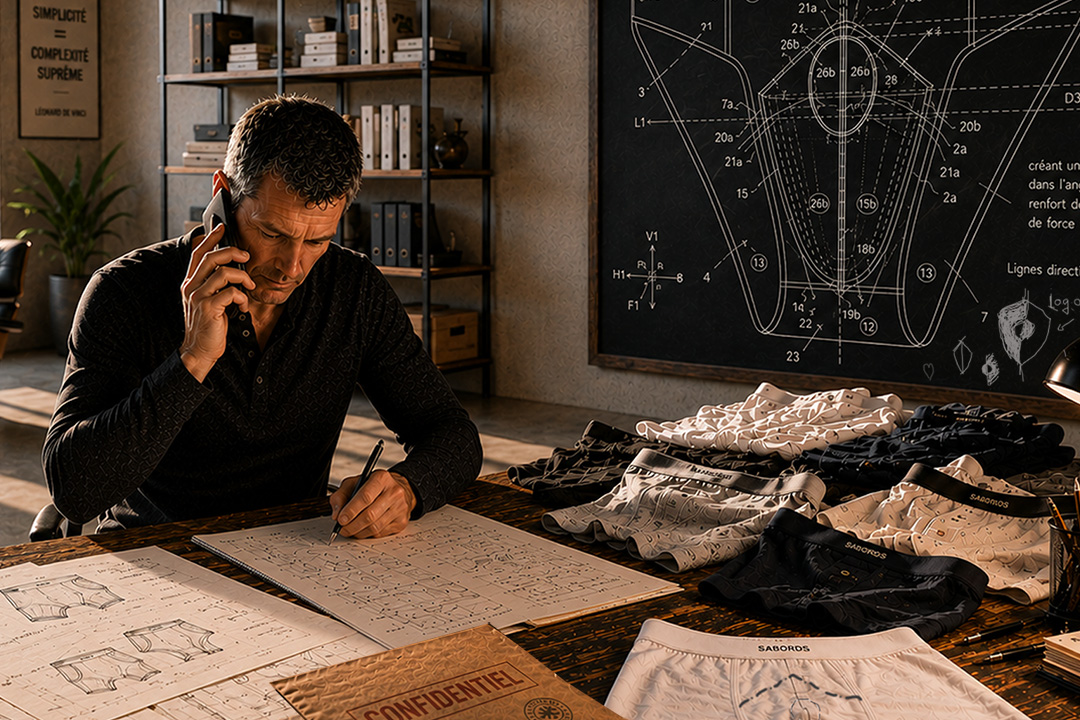
My initial patent search was encouraging, so I decided to file a patent application.
This wasn't my first invention. Years earlier, I had patented a laser disc storage device CD HOLDER PYLONES—but that's another story...
Writing a patent is nothing like filling out a form.
Every claim must define precisely what is being protected. Every word matters.
Technical drawings follow equally strict rules.
They are not designed to impress.
They exist to describe the invention with absolute precision.
To keep costs reasonable, I chose an independent patent attorney in the French countryside instead of a large Paris law firm.
During our very first phone conversation, something unexpected happened.
There was a long silence.
Then he admitted:
"I can't stand wearing underwear. I never wear any."
At that moment, I knew he was the right person to help write this patent.
For months, we refined every sentence.
Patent writing has its own language.
Too broad, and protection becomes weak. Too narrow, and protection becomes limited.
The technical drawings he produced looked more like aircraft blueprints than underwear sketches.
Once everything had been reviewed and approved, the application was finally filed.
I thought the hardest part was over.
It wasn't. The real examination had only just begun.
The Search Report

Several months later, the official patent search report arrived. Now it was no longer me searching databases.
Professional patent examiners had reviewed patents from all over the world.
Every cited document mattered. Every reference had the potential to weaken one of my claims.
The idea of a front opening wasn't new.
What proved to be new was its architecture, the protective flap, and the anatomical organization of the entire system.
Working with my patent attorney, we carefully explained why SABORDS was fundamentally different from every cited document.
Another milestone had been reached.
The inventive character of the invention had been recognized.
I was getting close.
Very close.
And yet...
Once again, everything could still come to an end.
My patent application was now subject to review by the French Ministry of Defense.
I had entered a phase I knew nothing about.

The story continues in the next chapter: When My Invention Was Placed Under Secrecy
The next chapter of the SABORDS Journal will reveal what happened during the Defense review—and why my invention had to remain secret.